
The call usually goes like this. The house was painted four or five years ago. It looked fine for a while. Now the south wall is chalky white when you brush a hand across it, there is a blister the size of a dinner plate under the bathroom window, and around the planter beds the paint is lifting off in sheets you can peel with a fingernail. The homeowner wants to know if they bought bad paint.
They almost never did. Stucco is a different animal from wood siding, and a paint job on stucco fails for reasons that have little to do with what was in the can. After twenty-five years of painting it, repainting it, and being asked to fix other people’s work on it, I can tell you the causes fit on one hand.
What stucco is, and why paint has a hard life on it
Stucco is cement, lime, and sand troweled over a lath and left to cure into a hard, porous crust. Three things about that crust decide how paint behaves on it. It is porous, so it drinks water from anywhere it can find it — rain, sprinklers, the soil it touches — and pushes that water back out as vapor through whatever you put on top of it. It is alkaline, especially when new, and high alkalinity attacks paint from underneath. And it moves. Every hot afternoon in the Valley the wall expands, every cool night it contracts, and hairline cracks open and close along with it.
A coating that ignores any one of those three will fail early. A coating chosen and applied with all three in mind will hold for ten to fifteen years on the same wall. The difference is in the diagnosis, not the brand.
The five ways a stucco paint job fails
Walk a failed stucco house with me and you will see the same handful of problems every time. Each one has a signature, and each one has a fix that happens before any new paint goes on.
What I find when I walk a failed wall
- Chalking. The Southern California sun breaks old acrylic down into a fine powder. Rub the wall and your palm comes away white. Paint applied over that powder bonds to the powder, not the wall, and lets go in a year or two. Chalk has to be washed off and, where it lingers, sealed with a masonry primer before the first coat.
- Painting it green. Fresh stucco needs at least twenty-eight days to cure, and longer in cool or damp weather. Paint it early and the lime in the mix burns the finish from behind: the color goes blotchy, the surface goes chalky, and adhesion never happens. A pH test on the wall tells you whether it is ready. Under ten and it can take standard paint; above that it needs an alkali-resistant primer or more time.
- Trapped water. Sprinkler heads throwing spray onto the house every morning. Planter beds mounded against the wall. A downspout dumping at the foundation. Flashing that failed at a window. The stucco soaks it up, the sun heats the wall, and the water turns to vapor looking for a way out. It pushes the paint off from the inside in blisters and sheets. No coating survives this, and the good ones fail worse than the cheap ones because they seal tighter.
- Efflorescence. The white, crusty bloom you see near the ground or below a leak is salt that water carried out of the stucco and left behind when it evaporated. It is a symptom of the water problem above, and it will lift paint just as surely. The salt gets washed off, the source of the water gets fixed, and only then does the wall get coated.
- Cracks painted over instead of repaired. Hairline cracks from thermal movement and settling are normal on a stucco house. Rolling paint across them is not a repair. The next heat cycle reopens the crack, the paint film tears along it, and water gets a new door. Cracks get cut out or filled with an elastomeric patching compound, allowed to cure, and then painted.
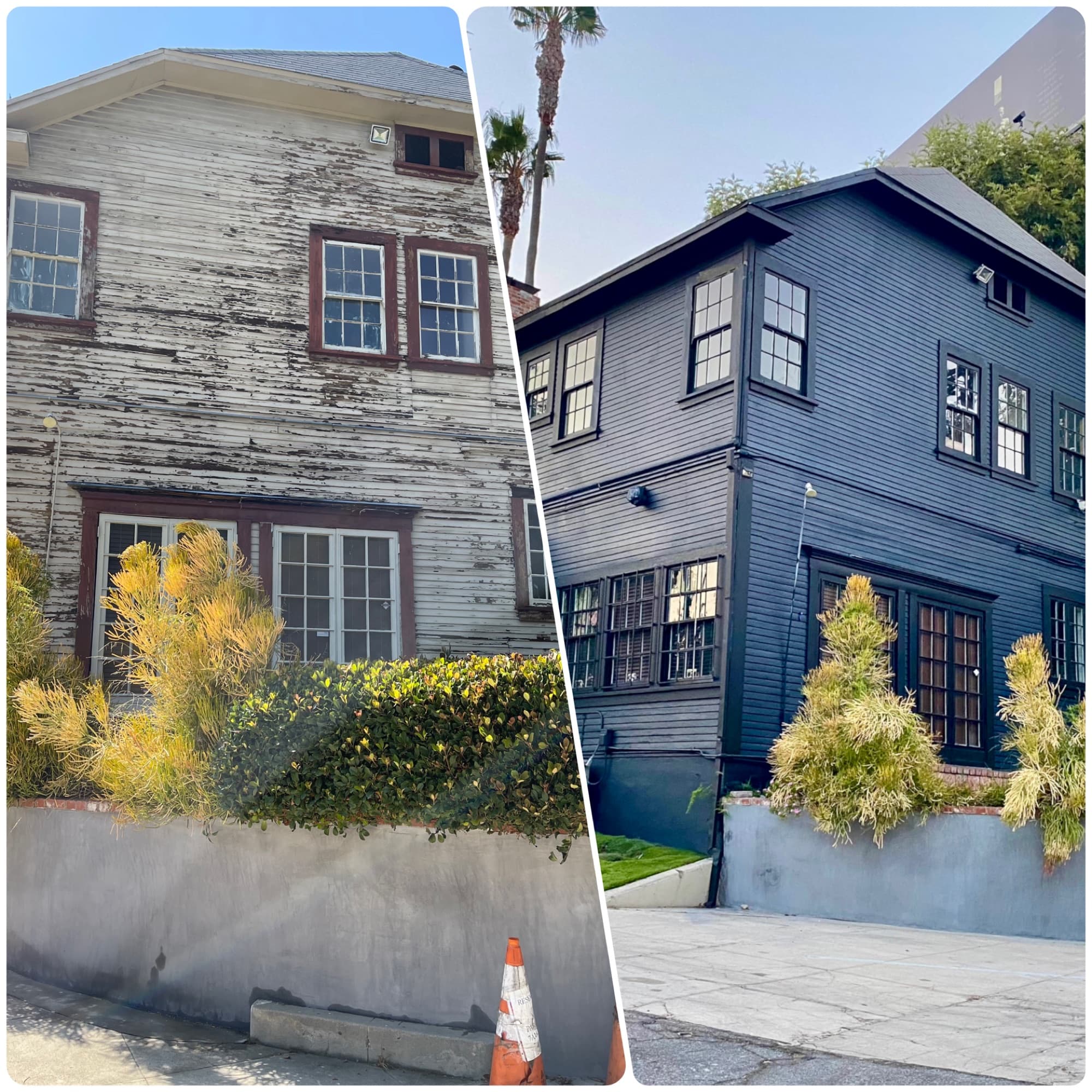
Notice what is missing from that list: the paint. I have seen top-shelf paint fail in three years on a wall with a sprinkler problem, and I have seen a modest acrylic hold for twelve on a wall that was prepped right and kept dry. The wall decides.
Top-shelf paint on a wet wall fails in three years. A modest acrylic on a dry, prepped wall holds for twelve. The wall decides.
Elastomeric or acrylic?
This is the question I get most on stucco, and a lot of painters answer it wrong in both directions. Elastomeric coatings go on several times thicker than regular paint and cure into a rubbery, waterproof membrane that stretches across hairline cracks as they open and close. On a wall covered in fine cracking, that is a real advantage. Elastomeric is also two to three times the price per gallon, and it is much less breathable.
That last part matters more than the sales pitch lets on. If any water is getting into the wall — from the ground, from irrigation, from a roof or window detail — an elastomeric coating traps it. The wall cannot dry out through the film, the vapor pressure builds, and the coating bubbles and peels in sheets. I have been called to more failed elastomeric jobs than failed acrylic ones, and nearly all of them were sold as a waterproofing fix for a wall that was still getting wet from somewhere else.
My rule is straightforward. A sound stucco wall that stays dry gets two full coats of a premium 100% acrylic, which breathes, resists the sun, and lasts ten years or more. A wall with widespread hairline cracking gets elastomeric, but only after the water problem is solved and the wall has been given time to dry. Elastomeric is never the cure for a water problem. It is a crack-bridging finish for a dry wall.
What a stucco repaint has to include
None of this is exotic. It is a sequence, and the sequence is where jobs get won or lost. This is the one I follow on every stucco exterior, whether it is a 1,400-square-foot ranch in Tarzana or a three-story house in Brentwood.
- Diagnose before quoting. I walk every wall with my hand on it. Where is it chalking? Where is it blistering, and what is on the other side of that wall? Where do the sprinklers hit? Where does the soil touch the stucco? The answers change the scope, and they should change the price.
- Fix the water first. Sprinkler heads get redirected or replaced. Soil gets pulled back from the wall. Downspouts get extended. Flashing and caulking around windows gets repaired. If the wall is going to keep getting wet, I would rather not paint it at all.
- Wash it properly, then let it dry. A pressure wash at the right distance removes chalk, dirt, and loose material. Efflorescence gets treated with a cleaner made for it. Then the wall dries for days, not hours. Stucco holds water deep, and painting it damp starts the whole failure over.
- Repair the cracks and let them cure. Hairlines get elastomeric patch. Anything wider gets cut back and patched with stucco, which then needs its own cure time before it can be primed.
- Prime where the wall needs it. New stucco, patched areas, and any surface with residual chalk get a masonry primer built for high pH. Bare, sound, well-washed old stucco sometimes does not need it. That is a judgment made on the wall, not in the office.
- Two full coats, back-rolled. Sprayed paint fogged across stucco texture leaves the low spots thin. I spray and then back-roll each coat into the texture so the film is the thickness the manufacturer specified everywhere, including the valleys. Two coats, at that thickness, is what the ten-to-fifteen-year lifespan is based on.
What to ask before you hire anyone
You do not need to know stucco to hire a painter who does. Ask what they are doing about the chalk, and listen for “wash” and “primer” rather than “it’ll cover.” Ask which primer, and why. Ask how many coats and whether they back-roll. Ask them what they saw at your sprinklers. A painter who has done this for a while will have opinions on all four before you finish the question. A painter who answers with a paint brand name is telling you what he sells, not what your wall needs.
And if your last paint job failed early, get someone to tell you why before you pay to do it again. The wall will show them. It always does.
If your stucco is peeling and you want to know what actually happened to it, call me and I will come walk the wall with you. The diagnosis is free and it is most of the job.
Paul Zappala
Founder, PZ Painting